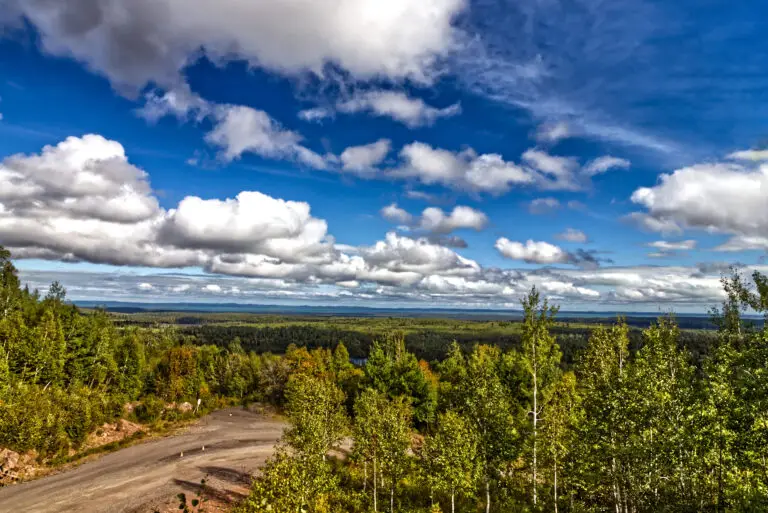
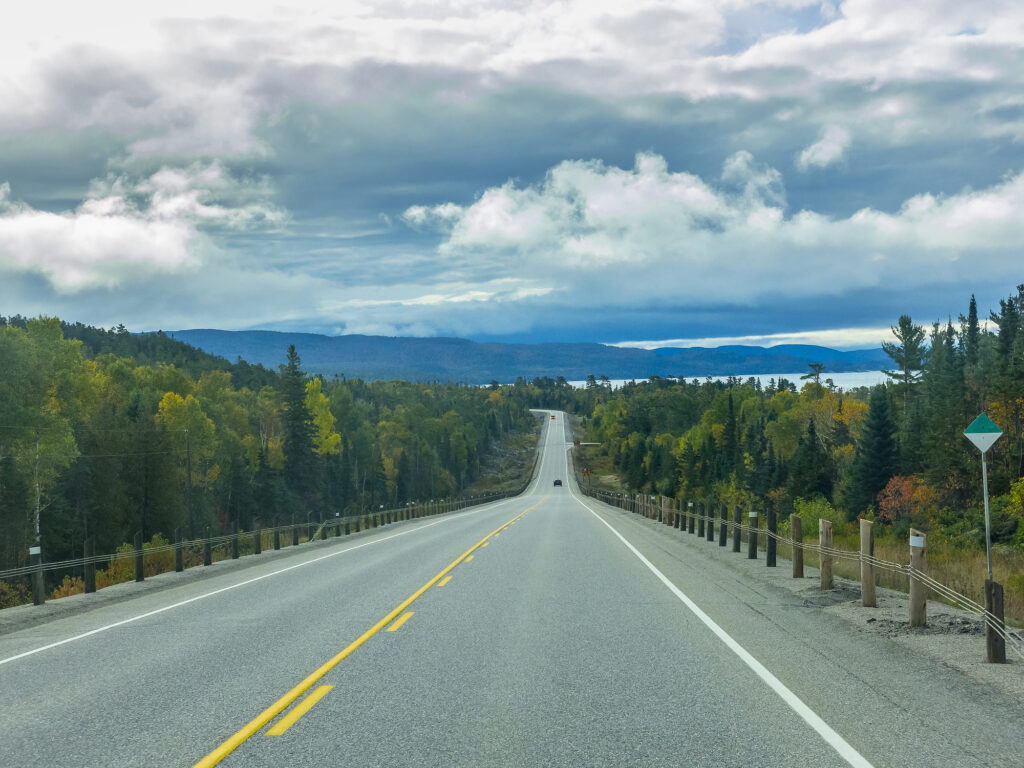
There’s something about Northern Ontario that draws people in.
Wide open space. Forests that stretch for miles. Lakes around every corner. And land prices that, compared to Southern Ontario, still feel like opportunity.
Over the past few years, we’ve seen more and more people looking north for property. Some are planning to build their dream home. Others are looking for acreage for recreation, a hunting property, or simply a long-term investment.
Communities like Mattawa, Bonfield, Papineau-Cameron, and the surrounding Nipissing District have seen a noticeable increase in land purchases as buyers search for privacy, affordability, and space to build something of their own.
But buying land in Northern Ontario is very different from buying a house in the city. There are more variables, more unknowns, and if you don’t understand what you’re looking at, it can quickly turn into an expensive lesson.
So if you’re considering buying land in Northern Ontario, here are some of the most important things to understand before signing the paperwork.
What Type of Land Are You Buying?
Not all land is created equal.
In Ontario, land generally falls into three common categories: raw land, vacant land, and serviced lots. Each comes with its own advantages, challenges, and costs.
Raw land is completely undeveloped property. No driveway, no utilities, no cleared areas, and sometimes no easy access. In many parts of Northern Ontario, raw land is often heavily forested and may require significant work before construction can even begin.
For buyers who want acreage and privacy, raw land is often the most attractive option. It’s usually the most affordable to purchase, but it also requires the most development work.
Then there is vacant land, which typically means the property has had some level of development in the past. There may have been a structure previously, a driveway already installed, or utilities nearby.
Vacant land is often easier to develop and may be easier to finance through lenders.
Finally, you’ll find serviced lots, usually located closer to towns or within subdivisions. These properties may already have hydro, municipal water, sewer services, or road access.
Serviced lots are generally the most expensive option, but they also require the least amount of preparation before building.
For buyers looking at properties in areas like Bonfield, Papineau-Cameron, and the rural areas surrounding North Bay, raw land is often the most common type of property available.
Private Land vs Crown Land in Northern Ontario
 One of the biggest surprises for people new to the region is how much land in Ontario is actually owned by the government.
Roughly 87% of Ontario is Crown land, with the majority located throughout Northern Ontario.
Crown land is public land owned by the provincial government and managed by the Ministry of Natural Resources and Forestry. While some Crown land can be leased or used for certain purposes, it usually cannot be purchased like traditional private property.
Many recreational activities such as hunting, fishing, and camping take place on Crown land, but ownership typically remains with the province.
For anyone looking to build a home, cottage, or cabin, the land you purchase will almost always be privately owned land, not Crown land.
Understanding this difference is important because many buyers assume that undeveloped land they see on a map is automatically available for sale. In Northern Ontario, that’s rarely the case.
Zoning and What You’re Allowed to Build
Before buying any land, one of the first things you should verify is zoning.
Zoning bylaws determine what a property can legally be used for. These regulations are established by local municipalities under the Ontario Planning Act.
Zoning can dictate things like:
- What type of structures can be built
- Minimum building sizes
- Setback distances from roads and property lines
- Whether commercial or agricultural uses are allowed
For example, land zoned as agricultural may require the property to be used primarily for farming purposes.
Changing zoning is sometimes possible through a rezoning application, but the process can take time and approval is never guaranteed.
If you’re considering land in Mattawa, Bonfield, Papineau-Cameron, or anywhere in the Nipissing District, it’s always a good idea to contact the township office and confirm zoning regulations before purchasing.
Road Access, Hydro, and Infrastructure
 This is where many first-time land buyers get caught off guard.
A piece of land might look perfect on paper, but if it doesn’t have proper road access or utilities nearby, development costs can add up quickly.
Before purchasing land, consider things like:
- Legal road access or driveway access
- Distance to the nearest hydro lines
- Well drilling requirements
- Septic system installation
- Internet and phone service availability
In many rural parts of Northern Ontario, properties will require private wells and septic systems, as municipal services are often unavailable outside town limits.
Access is another critical factor. If a property does not have a legal driveway or road allowance, creating access may involve negotiations with neighbouring properties or additional construction costs.
Land Clearing: One of the First Steps Before Building
One of the realities of buying raw land in Northern Ontario is that most properties are heavily forested.
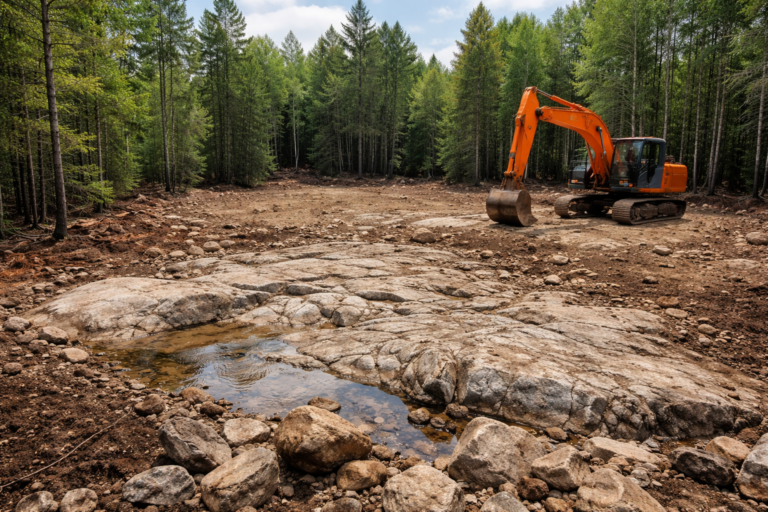
Before construction can begin, the land usually needs to be prepared. That often includes clearing trees, removing stumps, grading the ground, and creating access for construction equipment.
In areas like Mattawa, Bonfield, Papineau-Cameron, and across the Nipissing District, this type of site preparation is often the first major step in turning a piece of forest into a buildable property.
Clearing space for a home, driveway, septic system, and utilities can take careful planning and the right equipment.
For many buyers, this is where professional land clearing services come into play, helping transform a heavily wooded lot into a property ready for construction.
Financing Land Purchases in Ontario
Financing land can also be very different from financing a home.
Because raw land does not produce income and often does not contain structures, lenders typically view it as a higher risk.
As a result, land loans often require larger down payments, typically between 30% and 50% of the purchase price.
Some buyers choose alternative financing options such as:
- Home equity lines of credit (HELOCs)
- Refinancing an existing home
- Private lenders
- Seller financing agreements
Seller financing is fairly common in rural areas. In this arrangement, the land seller acts as the lender, allowing the buyer to make payments over time rather than paying the full purchase price upfront.
Due Diligence: Surveys, Soil Tests, and Restrictions
 Before finalizing a land purchase, there are several important steps that should never be skipped.
A land survey helps confirm the exact property boundaries and identifies any easements or right-of-ways that may affect the property.
A soil or percolation test may also be required if the property will need a septic system. This determines whether the soil can properly support septic drainage.
Other things to review include:
- Environmental protections or wetlands
- Floodplain areas
- Title restrictions or covenants
- Shared driveway agreements
Doing proper due diligence before purchasing land can prevent expensive surprises later.
Preparing Land for Construction
Once land has been purchased, the next phase is preparing the property for development.
For many properties in Northern Ontario, this means transforming a heavily wooded lot into a buildable site.
That process can include:
- Land clearing and tree removal
- Stump removal and root excavation
- Boulder removal and rock excavation
- Driveway construction
- Site grading and drainage preparation
Depending on the terrain, clearing land can be one of the most significant steps before construction begins.
Many property owners in Mattawa, Bonfield, and surrounding Northern Ontario communities begin this process by opening access to the property and preparing the building envelope where the home will eventually sit.
Property Taxes and Land Transfer Tax
Buying land in Ontario also comes with a few additional costs that buyers should plan for.
When purchasing land, buyers must pay Ontario Land Transfer Tax, just as they would when buying a home.
After purchasing the property, annual property taxes will apply even if the land remains vacant.
Tax rates vary by municipality, but rural properties in the Nipissing District and Northern Ontario are often lower than urban areas.
Why More People Are Buying Land in Northern Ontario
Interest in Northern Ontario land has grown significantly over the past few years.
People are looking for space, privacy, and the opportunity to build something of their own away from the congestion and rising costs of Southern Ontario.
Communities such as Mattawa, Bonfield, Papineau-Cameron, and the surrounding North Bay region continue to attract buyers searching for acreage, recreational properties, or land to build custom homes.
For many people, buying land here isn’t just a purchase — it’s a chance to create a lifestyle that simply isn’t possible in larger cities.
Final Thoughts
Buying land in Northern Ontario can be one of the most rewarding investments you make — but only if you understand what you’re getting into.
Taking the time to research zoning, access, development costs, and infrastructure can make the difference between a great opportunity and a costly mistake.
With the right planning and preparation, a piece of land can become anything from a dream home property to a cottage getaway or long-term investment.
And in Northern Ontario, there’s still something that’s becoming harder and harder to find elsewhere — room to build, room to grow, and room to breathe.