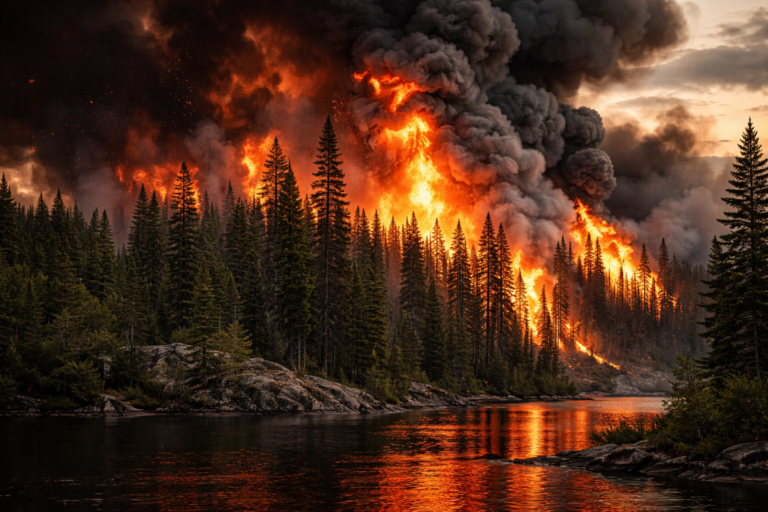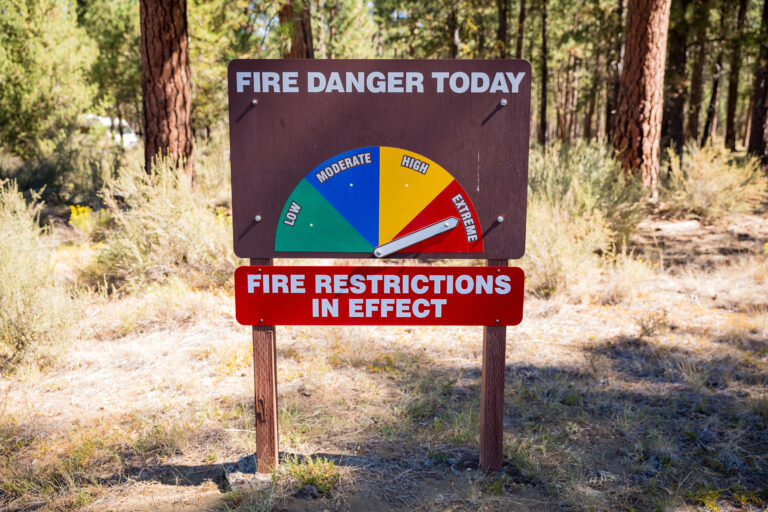
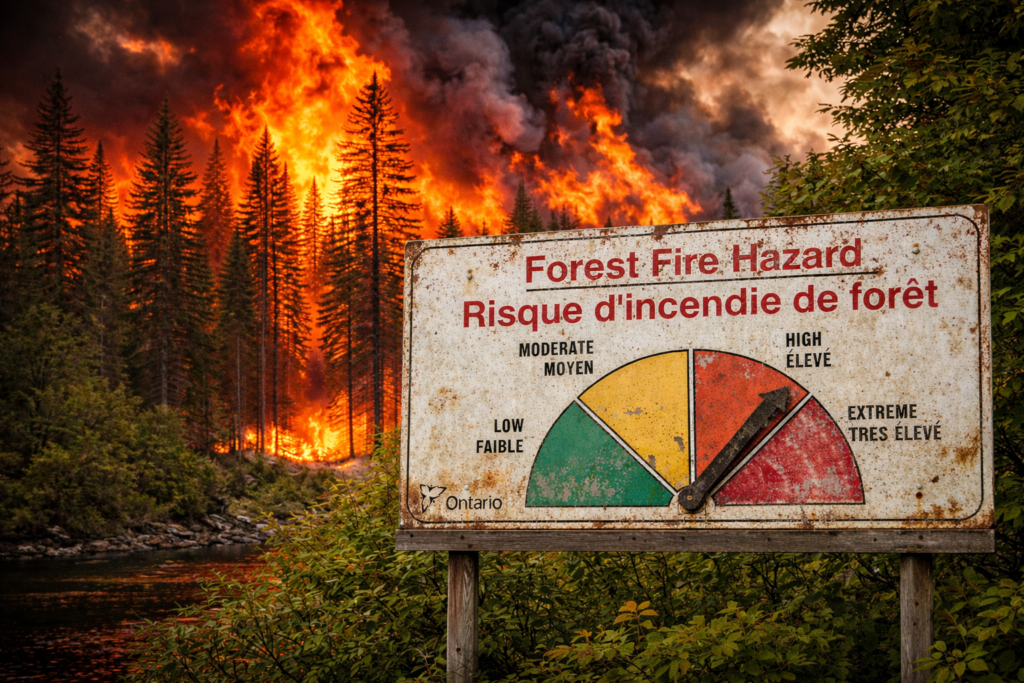
As Ontario approaches the start of the 2026 wildfire season on April 1, property owners across Mattawa and Northern Ontario are being urged to take wildfire prevention seriously—before conditions turn hot, dry, and unpredictable.
According to the Government of Ontario, the 2025 wildfire season was one of the most intense in recent years, with 643 wildfires burning over 597,000 hectares across the province . With increased staffing and equipment investments already underway, the province is preparing for another potentially challenging season.
But while government response is critical, wildfire prevention begins on your property.
Wildfire Risk Starts with Fuel on Your Land
One of the most overlooked aspects of wildfire prevention is fuel load—the amount of burnable material on a property.
Overgrown vegetation, dead standing timber, storm debris, dry grass, and dense undergrowth all act as fuel. When left unmanaged, even a small spark—from equipment, a cigarette, or a backyard fire—can escalate into a fast-moving wildfire.
The Ontario Ministry of Natural Resources identifies vegetation and fuel conditions as one of the most controllable factors in wildfire prevention .
That means property owners have more control than they think.
Forest Thinning: A Critical Step in Fire Prevention
For larger rural and wooded properties, forest thinning is one of the most effective ways to reduce wildfire risk.
Thinning works by:
- Reducing tree density
- Opening the canopy
- Removing ladder fuels (brush and saplings that carry fire upward)
- Limiting fire spread between trees
Guidelines from FireSmart Canada recommend:
- Pruning branches up to 2 metres from the ground
- Increasing spacing between tree crowns
- Removing deadfall and surface fuels
These steps dramatically reduce fire intensity and slow its spread .
Defensible Space: Protecting What Matters Most
When it comes to homes, cottages, and buildings, the most important work happens closest to the structure.
FireSmart Canada outlines three key zones:
0 – 1.5 metres (Immediate Zone)
- Non-combustible materials only
- No vegetation or debris
1.5 – 10 metres (Intermediate Zone)
- Short grass and reduced shrubs
- Fire-resistant landscaping
- Remove woody debris
10 – 30 metres (Extended Zone)
- Thin trees and prune branches
- Remove dead and downed material
- Increase spacing between vegetation
Additional recommendations include:
- Keeping firewood piles at least 10 metres from structures
- Relocating sheds, trailers, and combustible materials away from buildings
These measures can significantly improve a structure’s ability to withstand wildfire exposure .
Fire Breaks: Slowing the Spread of Wildfires
On larger properties, fire breaks (fuel-reduced corridors) are a powerful strategy.
These are cleared or managed strips designed to:
- Slow fire spread
- Reduce fire intensity
- Provide access for emergency response
According to FireSmart guidance:
- ~30 metres wide on flat terrain
- ~40 metres on moderate slopes
- ~50 metres on steep terrain
Because fire moves faster uphill, slope plays a major role in planning these breaks .
Why Land Management Is No Longer Optional
Wildfire prevention isn’t just about reacting—it’s about proactive land management.
Services like:
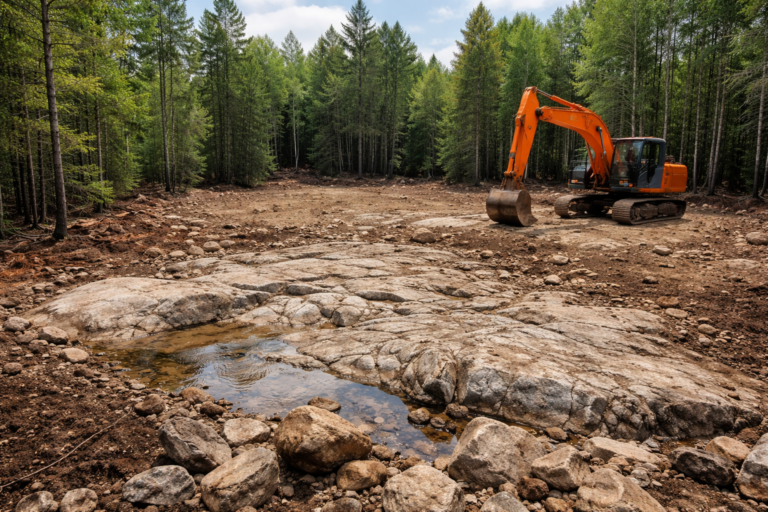
- Land clearing
- Forest thinning
- Underbrush removal
- Storm debris cleanup
- Access road and corridor creation
…aren’t just about aesthetics. They directly:
- Reduce fuel load
- Improve emergency access
- Create defensible space
- Protect structures and investments
For many rural property owners, this work gets delayed—sometimes for years—until a dry season puts everything at risk.
A Message to Northern Ontario Property Owners
Canada Brush Control Ltd. is encouraging property owners across Mattawa and Northern Ontario to take action now—before wildfire season peaks.
“People tend to think about wildfire prevention once the season is already underway, but by then, a lot of the most effective work should already be done,” says owner Grant Browning. “If you’ve got heavy brush, deadfall, or dense wooded areas near structures, those are all things worth addressing early.”
With conditions becoming more unpredictable each year, early preparation is no longer optional—it’s essential.
Read the Full Media Coverage
This article is based on a press release that was also featured by BayToday.
Get Your Property Wildfire-Ready
If you’re in Mattawa or anywhere across Northern Ontario and planning work this season, now is the time to act.
Canada Brush Control Ltd. specializes in:
- Land clearing for new builds
- Forest thinning and vegetation management
- Storm debris cleanup
- Property preparation and access improvement
249-501-0888 | https://www.canadabrushcontrol.com