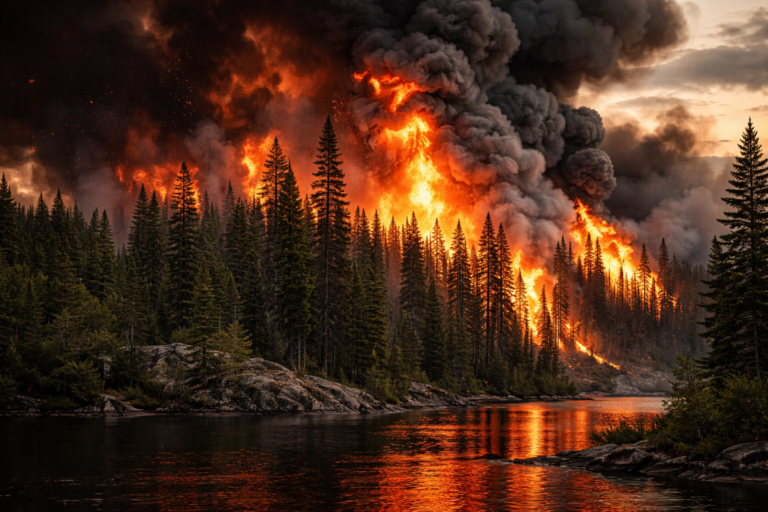
For a long time, wildfire felt like someone else’s problem.
When Canadians heard the word, the images usually came from British Columbia, Alberta, or vast, remote stretches of land far removed from everyday life in Northern Ontario. Fires were something that happened “out west,” not something most rural Ontario property owners actively planned for.
That way of thinking doesn’t hold up anymore.
Northern Ontario has seen longer dry periods, hotter summers, and more unpredictable weather patterns in recent years. At the same time, more people are buying rural land, building cottages, opening properties for development, or simply leaving acreage unmanaged for years at a time. Add in recent forest health issues, and wildfire risk is no longer theoretical — it’s local.
The truth is simple, most wildfire damage doesn’t happen because people don’t care — it happens because fuel quietly builds up over time.
Brush control and forest thinning aren’t extreme measures. They’re preventative land management. And in many cases, they’re the difference between a fire that slows down and one that gets out of control.
When “Natural” Growth Becomes a Problem
There’s a common belief that leaving land untouched is always the most natural or environmentally responsible option. In untouched wilderness, that can sometimes be true. Around homes, cottages, access roads, and developed or semi-developed properties, it often isn’t.
When land goes unmanaged for long periods, several things happen at once:
- Dense underbrush fills in at ground level
- Deadfall accumulates year after year
- Saplings grow tightly packed
- Invasive species take hold
- Airflow becomes restricted
What forms is a continuous fuel structure, starting on the forest floor and extending into lower tree branches. That structure is exactly what fire needs to move quickly and burn hot.
Many properties still look healthy — green, quiet, and peaceful. But once extended dry conditions set in, that same growth becomes volatile.
Wildfire doesn’t require dramatic conditions to start. It just needs fuel.
The Spruce Budworm Reality: More Deadfall, More Risk
In Northern Ontario, we’re also dealing with something that often gets overlooked in wildfire conversations: the aftermath of spruce budworm outbreaks, sometimes casually referred to as the “spruce bug.”
Spruce budworm primarily affects spruce and fir trees, stressing them over multiple seasons. The result isn’t always immediate tree death. Instead, it shows up as dead tops, dying limbs, thinning canopies, standing dead trees, and eventually increased deadfall on the forest floor.
From a wildfire perspective, this matters.
Dead needles, dry branches, and fallen timber cure quickly during warm, dry weather. They ignite faster and burn hotter than healthy green vegetation. In other words, budworm damage quietly increases fuel loads — often without property owners realizing how much conditions have changed around them.
This isn’t about panic. It’s about recognizing that today’s forests are not the same as they were ten or twenty years ago, and land management has to adapt accordingly.
How Fire Moves Through Unmanaged Land
Fire behavior is shaped almost entirely by what’s growing and how it’s arranged.
Dense brush allows fire to spread rapidly along the ground. Closely spaced trees give flames a ladder into the canopy. Dead or stressed vegetation ignites faster and burns hotter. When these elements connect, fire doesn’t creep — it runs.
Add wind, limited rural access, and longer emergency response times, and the window to control a fire shrinks fast.
This risk isn’t limited to deep bush. Some of the most vulnerable areas include:
- Overgrown driveways
- Brush-filled fence lines
- Untouched property edges
- Areas around sheds and outbuildings
- Properties bordering neighbouring homes or subdivisions
Wildfire prevention starts long before smoke is in the air.
Forest Thinning: Maintenance, Not Destruction
Forest thinning is often misunderstood. It’s not clear-cutting, and it’s not about stripping land bare. Done properly, thinning improves forest health while significantly reducing wildfire risk.
Thinning focuses on:
- Removing overcrowded trees
- Eliminating dead or diseased growth
- Increasing spacing for airflow
- Breaking up continuous fuel paths
A thinned forest behaves very differently during a fire. Flames are less intense, spread more slowly, and are far easier to manage. In many cases, thinning is what keeps a fire on the ground instead of letting it climb into the canopy.
There are long-term benefits as well:
- Stronger remaining trees
- Reduced competition for nutrients and water
- Improved wildlife movement
- Lower risk of insect and disease spread
Thinning isn’t fighting nature — it’s managing it responsibly.
Brush Control: The First and Most Immediate Line of Defense
If forest thinning addresses the structure of a wooded area, brush control deals with the immediate danger.
Low-growing vegetation is often the first thing to ignite. Shrubs, saplings, tall grasses, and accumulated debris act like kindling. Once they catch, fire has a clear path to spread outward or climb upward.
Effective brush control focuses on:
- Removing dense undergrowth
- Clearing around structures
- Managing fence lines and property boundaries
- Opening access routes
- Reducing ignition points
This is especially critical close to homes and cottages, where reducing fuel has the biggest impact on outcomes.
Fire Chiefs in Northern Ontario Are Saying the Same Thing
This isn’t just contractor talk. Fire services across Northern Ontario have been repeating the same message for years: reduce fuel and create defensible space before it becomes an emergency.
That point was made clearly by Tom Bain, Fire Chief of Wawa Fire and Emergency Services, when his municipality launched a brush and tree removal initiative to improve community safety.
As Chief Bain explained, “The goal is to reduce the density of the vegetation in the targeted areas, as well as the number of really tall trees.”
That statement cuts right to the heart of wildfire prevention. It’s not about wiping land clean — it’s about breaking up fuel continuity and preventing fire from having an easy path to grow and spread.
Access: A Risk Most People Don’t Think About
One of the most overlooked wildfire risks on rural properties is poor access.
Overgrown driveways, narrow lanes, and brush-filled entrances don’t just make day-to-day use inconvenient. They slow emergency response when time matters most.
Clear, maintained access routes:
- Reduce the chance of fire spreading inward
- Allow emergency vehicles to reach structures
- Improve year-round usability
- Reduce ignition risk from vehicles and equipment
Access clearing is often one of the simplest improvements with the biggest safety payoff.
Defensible Space: Giving Fire Fewer Options
Fire professionals often talk about defensible space — the buffer between structures and unmanaged vegetation that slows or stops fire spread.
Defensible space isn’t about removing everything. It’s about intention.
That includes:
- Thinned tree spacing
- Minimal underbrush near buildings
- Clear zones around structures
- Reduced ladder fuels
- Thoughtful vegetation placement
With increased deadfall from budworm-affected trees, defensible space has become even more important. Dry, stressed material close to buildings can change fire behaviour quickly and unpredictably.
Why DIY Clearing Often Makes Things Worse
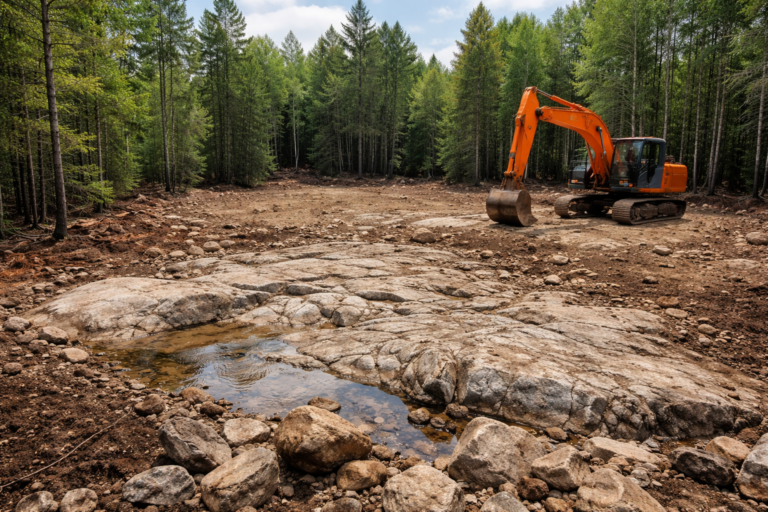
Many landowners start with good intentions — a chainsaw, a brush cutter, a few weekends of work. Unfortunately, DIY clearing often introduces new hazards instead of reducing them.
Common problems include:
- Leaving piles of cut brush
- Creating uneven or unsafe terrain
- Damaging remaining trees
- Clearing inconsistently
- Increasing drying and regrowth
Cut material left on the ground can burn hotter than standing brush. Poorly planned clearing can turn a manageable property into a more volatile one.
Professional clearing isn’t about doing more work — it’s about doing the right work in the right places.
How Canada Brush Control Approaches Wildfire Prevention
At Canada Brush Control, wildfire risk reduction is treated as practical land management, not a one-size-fits-all service.
Every property is different. Terrain, vegetation type, forest health, access, and future land use all matter.
Our focus is on:
- Strategic brush clearing
- Selective forest thinning
- Access road and perimeter clearing
- Preparing land for safe use and development
The goal isn’t to over-clear. It’s to reduce fuel, improve structure, and leave the land safer and more usable than we found it.
Timing Matters
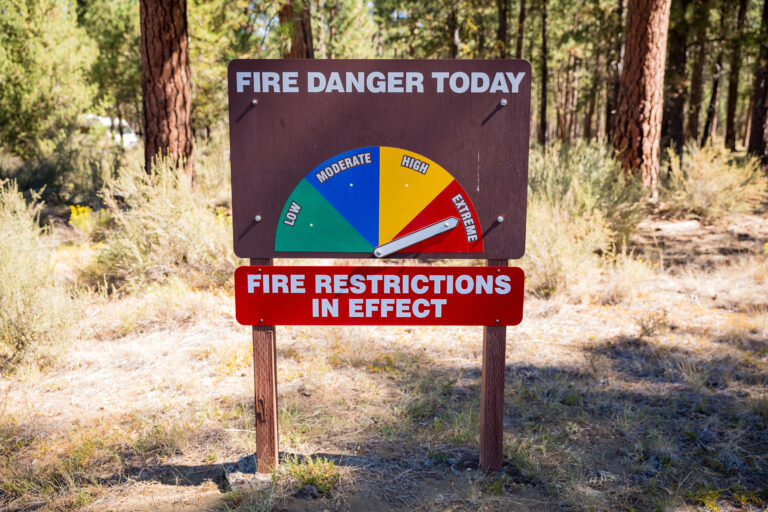
One of the biggest mistakes property owners make is waiting until wildfire conditions are declared.
By then:
- Fire bans may limit work
- Contractors are booked solid
- Dry conditions increase risk
- Options become limited
Preventative clearing is most effective before fire season, when work can be planned properly and completed safely.
Preparation done early is always less expensive — and far less stressful — than reacting late.
Final Thoughts: Better Managed Land Is Safer Land
Wildfires aren’t going away. What can change is how prepared our land is when they happen.
Smart brush control and forest thinning don’t fight nature — they work with it. They make forests healthier, properties safer, and land more functional long-term.
If you own rural or wooded property in Northern Ontario, the real question isn’t whether wildfire risk exists. It’s whether your land is ready for it.
Thinking About Reducing Wildfire Risk on Your Property?
If you’re in Northern Ontario and want a practical, grounded approach to land management and wildfire prevention, Canada Brush Control can help.
Prepared land isn’t just cleaner land — it’s safer land.