Happy New Year from all of us at Canada Brush Control. With 2026 officially here, this is the time of year when many property owners start looking ahead—thinking about spring projects, future builds, land improvements, and all the ideas that have been sitting on the back burner.
Whether you’re planning to build a home, reclaim overgrown land, expand a driveway, restore a pasture, or finally address long-standing drainage or safety issues, one thing remains true: every successful project starts with proper planning and proper site preparation.
In Northern Ontario especially, the land doesn’t forgive shortcuts. Weather, soil conditions, rock, wetlands, and hidden hazards all play a role. That’s why education, preparation, and working with experienced professionals matter more than ever.
This article is meant to help you start 2026 informed, prepared, and realistic about what it actually takes to get your property ready—before the first shovel ever hits the ground.
Why Planning Early Makes a Difference
One of the biggest mistakes we see year after year is waiting until spring to “figure it out.” By the time snow melts, contractors are booked, equipment availability tightens, and rushed decisions lead to higher costs and compromised results.
Planning early allows you to:
- Budget properly
- Understand site limitations
- Identify potential hazards
- Secure permits or approvals if required
- Schedule work during ideal ground conditions
Government resources like Natural Resources Canada provide valuable insight into soil, terrain, and environmental considerations that affect land development across the country. Reviewing this kind of information early helps prevent surprises later on.
(High-authority reference: https://natural-resources.canada.ca)
Understanding Your Land Before You Clear It
No two properties are the same. A five-acre lot in one township can behave completely differently from five acres ten minutes down the road.
Key things that should be assessed before any clearing begins include:
- Soil type and drainage
- Slope and elevation changes
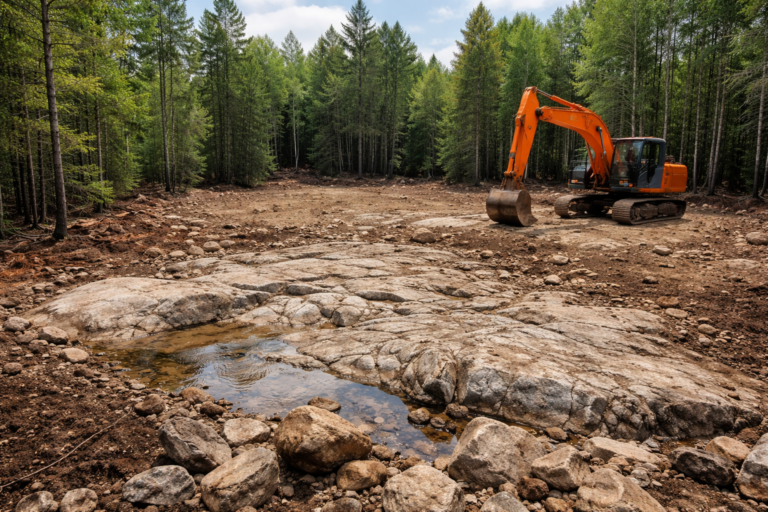
- Rock and boulder presence
- Wet areas or seasonal water flow
- Existing trees (healthy vs hazardous)
- Proximity to structures, hydro lines, or roads
Organizations like the Ontario Ministry of Natural Resources and Forestry outline best practices for land management, tree removal, and environmental responsibility. These guidelines exist for a reason—and following them protects both the land and the homeowner.
(Reference: https://www.ontario.ca/page/ministry-natural-resources-and-forestry)
Land Clearing Isn’t Just About Removing Trees
A common misconception is that land clearing simply means cutting everything down. In reality, proper clearing is selective, strategic, and purposeful.
Depending on your goals, clearing may involve:
- Removing dead or dangerous trees
- Thinning overgrowth while preserving healthy growth
- Clearing building envelopes
- Creating access routes and driveways
- Preparing areas for utilities or foundations
- Reclaiming fields or pastures
Done correctly, land clearing improves safety, usability, and long-term value—not just appearance.
Site Preparation: The Foundation of Every Build
If you’re planning a new home or structure, site prep is one of the most critical phases. Poor preparation leads to ongoing issues like flooding, foundation movement, erosion, and access problems.
Good site prep includes:
- Proper grading
- Drainage planning
- Stable access routes
- Clear utility corridors
- Safe equipment access
According to Canada Mortgage and Housing Corporation (CMHC), site conditions directly impact long-term housing durability and maintenance costs. Getting it right upfront can save tens of thousands over time.
(Reference: https://www.cmhc-schl.gc.ca)
Driveways, Access, and Year-Round Usability
In rural and semi-rural areas, access is everything. A driveway isn’t just about convenience—it’s about safety, emergency access, and long-term durability.
A well-built driveway accounts for:
- Proper base material
- Water runoff and culverts
- Winter conditions
- Equipment and delivery access
- Long-term maintenance
Skipping proper prep here often leads to washouts, soft spots, and costly repairs down the road.
Pasture Restoration and Property Reclamation
We work with many clients who purchase older farms or rural properties that haven’t been maintained for decades. Overgrown pastures, brush-covered fields, and hidden debris are extremely common.
Reclaiming this land safely allows:
- Immediate agricultural use
- Improved fencing layouts
- Better drainage
- Safer conditions for animals and equipment
Resources like Ontario Ministry of Agriculture, Food and Rural Affairs (OMAFRA) provide insight into pasture management and land productivity.
(Reference: https://www.omafra.gov.on.ca)
Safety: The Part That Should Never Be Rushed
Land work comes with real risks—hidden boulders, buried debris, unstable trees, soft ground, and overhead hazards. This is not DIY territory.
The Canadian Centre for Occupational Health and Safety (CCOHS) outlines why professional training, proper equipment, and risk assessment are essential when working around heavy machinery and land-clearing operations.
(Reference: https://www.ccohs.ca)
At Canada Brush Control, safety isn’t an afterthought—it’s built into how we plan and execute every job.
Timing Matters More Than People Realize
Spring isn’t always the best time for every project. Wet ground, frost release, and unstable soil can slow work or cause damage.
Planning allows work to be scheduled when conditions are right—not just when it’s convenient.
What to Think About Before Making the First Call
Before reaching out to any contractor, ask yourself:
- What is my end goal?
- Is this for a build, access, or maintenance?
- What areas must be preserved?
- What timeline am I realistically working with?
- Do I want this done once—or fixed repeatedly?
Being prepared leads to better outcomes and more accurate estimates.
Looking Ahead to 2026
A new year brings new opportunities—and new responsibilities as property owners. Whether your plans are big or small, taking the time to do things properly sets the tone for everything that follows.
At Canada Brush Control, we take pride in helping property owners across Mattawa and the surrounding areas start their projects the right way—with experience, transparency, and respect for the land.
If you’re planning ahead for spring or summer, now is the time to start the conversation. Give us a call today at 249-501-0888, send us a message, and let’s turn your plans into reality—one tree at a time.