There’s nothing more exciting than buying vacant land in Northern Ontario and planning your dream home build. You stand there looking at the trees and open sky, picturing the driveway, the foundation, maybe a shop off to the side, maybe that wrap-around porch you’ve always wanted. In your mind, it’s already built.
But here’s the reality most people don’t think about:
Not all land is build-ready land.
When you’re buying rural property in Northern Ontario — whether it’s in Mattawa, Papineau-Cameron, Bonfield, North Bay, or anywhere across Nipissing District — what’s under the surface can completely change your construction plans, your timeline, and your budget.
I’ve seen it firsthand.
Bedrock: The Hidden Cost Beneath the Soil
Northern Ontario sits on Canadian Shield. Rock is part of the landscape. That’s expected. What surprises people is how shallow that rock can be.
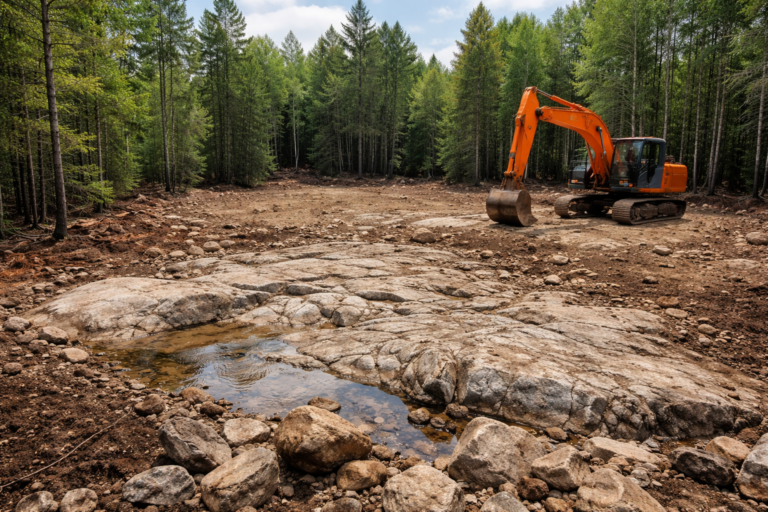
I was clearing a lot for a new home build not long ago. Beautiful property. Treed. Quiet. It looked perfect on the surface. Once we began clearing and working the ground to try and make a level area, we discovered there was less than six inches of soil across most of the build area. Under that? Solid bedrock.
The property owner had no idea.
And suddenly everything changed.
Basement plans had to be reconsidered. Blasting became a possibility. Rock trenching for hydro lines was unavoidable. Septic design became complicated. Even well placement and drilling strategy had to be rethought. What originally looked like a straightforward custom home build in Northern Ontario turned into a completely different project once the real ground conditions were exposed.
When shallow bedrock covers the majority of a property, costs escalate quickly. Excavation takes longer. Equipment wear increases. Utility trenching becomes more labour-intensive. Septic options shrink. In some cases, engineered solutions are required.
And here’s the financial reality people don’t talk about: if you discover after closing that most of your property is solid rock with minimal soil depth, not only does your build budget change, but resale becomes harder. Experienced buyers ask about soil depth, septic feasibility, and excavation requirements. If the answer is “six inches of soil over rock,” you’re suddenly looking for a very specific buyer willing to take that on.
The cheaper lot isn’t always the cheaper build.
Water Table: What Looks Dry Isn’t Always Dry
Water is the other major factor when buying land to build a home in Northern Ontario.
A property can look bone dry in August. It can look firm and stable during a fall viewing. But in spring melt? Completely different story.
When you’re walking a potential building lot, pay attention to natural low spots, dark spongy soil, cattails, reeds, or properties bordering swamp. Those are signs the water table may be higher than you think. A high water table impacts foundation drainage, sump pump requirements, septic design, and long-term moisture control. Building on muskeg or marshy soil without proper preparation can lead to ongoing settlement issues and water problems that never truly go away.
I’ve cleared lots that looked absolutely perfect on the surface. Dry ground. Solid footing. No obvious standing water. Everything looked build-ready. Then after clearing, we dug test holes to see what we were really working with — and at about two feet down, we hit the water table. The hole filled up in seconds.
That’s the moment the tone of the project changes.
When groundwater sits that high, foundation design may need adjustment. Drainage systems become critical. Septic installation becomes more complex and often more expensive. You’re no longer building on dry ground — you’re building against water.
If those conditions aren’t identified early, they can add significant cost to your new home build. And just like with bedrock, properties with known high water tables can become harder to resell later. Buyers who understand site development will immediately ask about groundwater levels.
What you don’t know before closing can cost you long after.
Soil Type: Clay, Sand or Mixed Till?
Soil in Northern Ontario varies dramatically, sometimes even within the same township. And sometimes, even within the same property.
I’ve been on properties where one area was all sand — clean sand, no rock, easy to work with. Move 20 feet over and suddenly you’re into a rocky section full of boulders. Go another 40 feet the other direction and you hit heavy clay a foot down. Same lot. Completely different ground conditions.
That’s how unpredictable Northern Ontario soil can be.
Clay-heavy soil holds water, freezes hard, and increases the risk of frost heave and drainage issues. Sandy soil typically drains well and is often more forgiving for septic systems. Mixed glacial till is common throughout Nipissing District but can be inconsistent from one section of a property to another. And then there’s shallow rock with thin topsoil, which limits everything from foundation depth to landscaping plans.
Soil affects your foundation stability, driveway construction, grading strategy, frost protection, septic feasibility, and long-term structural integrity. When buying rural land to build a custom home in Mattawa, Bonfield, Papineau-Cameron or anywhere across Northern Ontario, understanding soil conditions isn’t overthinking it — it’s protecting your investment.
Septic Feasibility: Can the Land Support It?
Most rural properties in Mattawa, Papineau-Cameron, Bonfield and surrounding areas rely on septic systems. But not every piece of land easily supports one.
Septic installation depends on soil type, depth to bedrock, water table height, and available lot area and setbacks.
Clay-heavy soil holds water and drains poorly. Shallow bedrock limits excavation depth. High groundwater restricts septic design options. All of these factors can lead to engineered systems, raised beds, or alternative layouts that increase cost.
Before purchasing vacant land in Northern Ontario to build your dream home, speaking with a licensed septic designer is one of the smartest moves you can make. A quick feasibility conversation can prevent major surprises later.
Drainage and Natural Slope
Water always wins. The question is whether you plan for it.
When evaluating vacant land for sale in Northern Ontario, ask yourself where the water goes after a heavy rain. Look at natural slopes, low areas, existing ditches, culverts, and signs of erosion. If your building site is downhill from swampy bush or higher terrain, runoff needs to be managed properly.
Improper drainage can lead to wet basements, driveway washouts, ice buildup, and long-term foundation stress. In Northern Ontario’s freeze-thaw climate, those issues don’t improve with time — they get worse.
Hydro Access and Utility Costs
Many buyers assume that if hydro lines are nearby, connection will be simple and affordable. That isn’t always the case.
Before closing on rural property, confirm the distance to the nearest hydro service, whether a service already exists on the property, whether easements are required, and what the actual connection costs will be.
Extending hydro in Northern Ontario, especially across rock or heavily treed land, can be more involved and expensive than expected.
Well Feasibility and Water Quality
In rural Northern Ontario, drilled wells are standard. But depth and water quality vary by area.
Before buying land, speak to neighbouring property owners. Ask how deep their wells are, whether they’ve experienced iron or sulphur issues, and whether their water supply is consistent year-round. Geological conditions affect drilling depth and cost, especially in rock-heavy regions.
Planning ahead for well installation helps avoid unexpected expenses during construction.
Zoning and Setbacks
Finally, confirm zoning with the local township or planning authority. Ensure the property is zoned for residential construction and meets setback requirements, shoreline regulations, and minimum dwelling size standards.
Never assume that vacant land automatically means build-ready land.
The Bottom Line
Two properties can look identical on the surface and have completely different development costs underneath.
One may have deep workable soil, solid drainage, easy septic conditions, and straightforward utility access.
The other may have six inches of soil over bedrock, groundwater sitting two feet below grade, and varying soil conditions across the same lot.
On paper, they’re both “vacant land for sale in Northern Ontario.”
In reality, one could cost tens of thousands more to develop — and be far harder to resell if conditions aren’t favourable.
Buying land to build a custom home in Northern Ontario is an incredible opportunity. But excitement should never replace due diligence.
Walk the land carefully. Visit during different seasons if possible. Ask direct questions. Confirm hydro access. Speak to a septic designer. Consider digging test holes before closing.
Because once you sign on the dotted line, those ground conditions become your responsibility.
And building your dream home should start on solid ground — not unexpected bedrock, hidden water, or surprises beneath the surface.